Peptides are one of the most talked-about ingredients in modern skincare — but not all peptide products are created equal. Alexandra Jacobo, founder of LUMIA Beauty, breaks down what GHK-Cu is, why formulation matters, and what to look for in a peptide serum.
Beauty Peptides: What You Should Know Before Choosing Your Next Skincare Product

By Alexandra Jacobo | Founder, LUMIA Beauty | Co-founder, Jacobo Wellness
If you’ve been paying attention to the skincare world lately, you’ve probably noticed a new buzzword creeping into ingredient lists and beauty blogs: peptides. Not the kind you hear about in biohacking circles or longevity podcasts, though they’re related. We’re talking about peptides specifically formulated for your skin. They’re becoming one of the most talked about ingredients in modern skincare.
As someone who’s spent years in the operations and wellness space, is married to a functional medicine doctor, and founded LUMIA Beauty, I’ve had a front-row seat to how peptide science is crossing over from clinical medicine into everyday skincare. What was once reserved for dermatologists’ offices and compounding pharmacies is now showing up in serums you can use at home. But not all peptide products are created equal, and understanding what’s actually in your bottle matters.
What Are Beauty Peptides?
Peptides are short chains of amino acids that act as messengers for your skin. They signal skin cells to support processes like collagen production, repair, hydration, and maintaining a healthy skin barrier.
What many people don’t realize is that “peptides” isn’t a single ingredient. It’s a broad category, and different peptides serve different functions. Many drugstore skincare products use signal peptides like Matrixyl or Argireline, which can help improve the appearance of fine lines and skin texture. Copper peptides like GHK-Cu are different. As a naturally occurring tripeptide, GHK-Cu has been extensively studied for its role in collagen production, skin repair, wound healing, and tissue regeneration. Understanding those differences helps you look beyond the word “peptide” on a label and better evaluate what a product is designed to do.
Why GHK-Cu Matters
Among the many peptides used in skincare, GHK-Cu has earned significant attention because of the breadth of research behind it. Studies suggest it supports collagen synthesis, skin repair, antioxidant activity, and overall skin quality through consistent use.
While GHK-Cu is impressive on its own, formulation matters just as much as the ingredient itself. Pairing it with complementary ingredients can enhance hydration, strengthen the skin barrier, and create an environment that supports healthier-looking skin over time.
Why I Chose GHK-Cu, Hyaluronic Acid, and Vitamin B5 for LUMIA Beauty
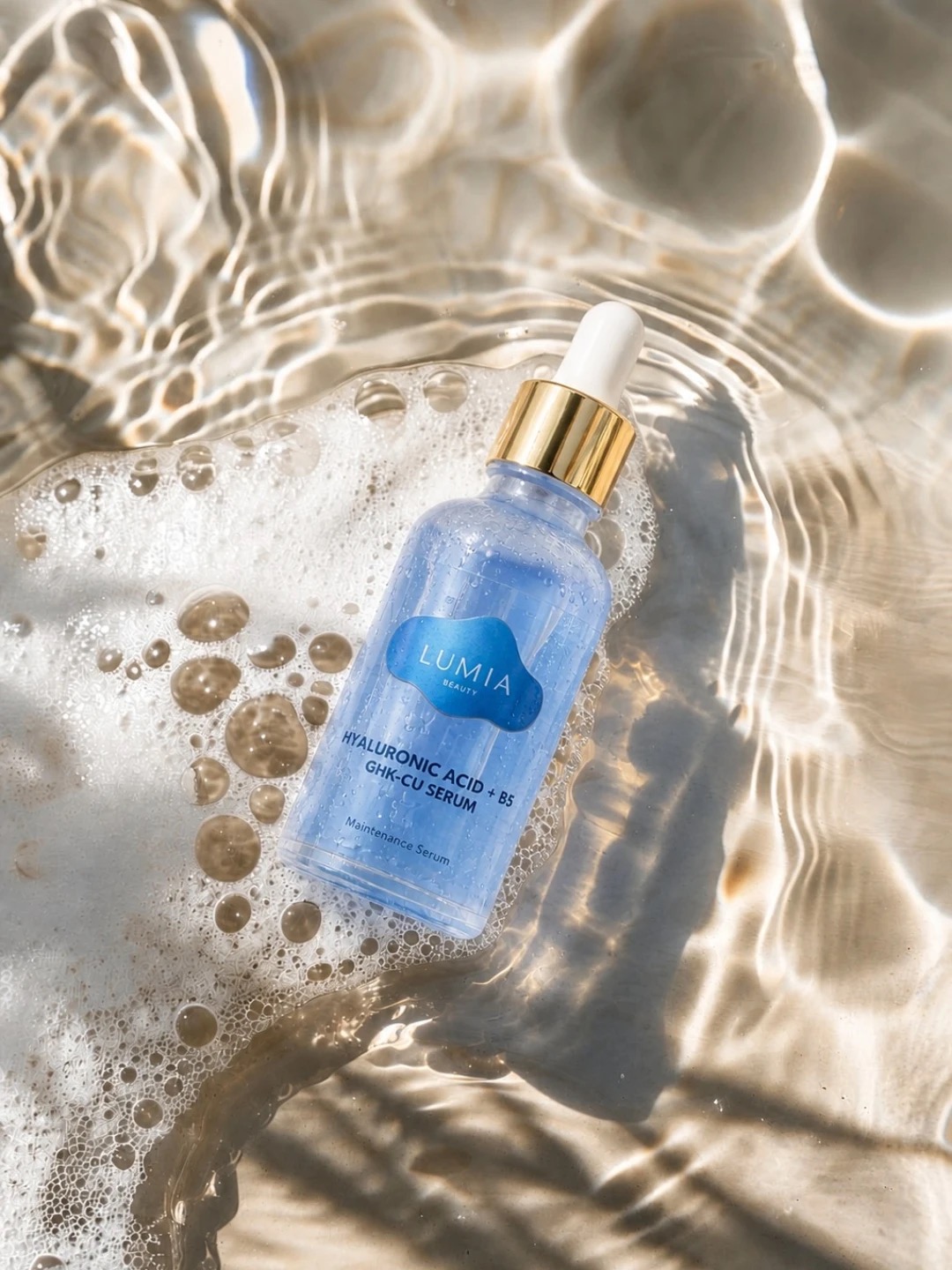
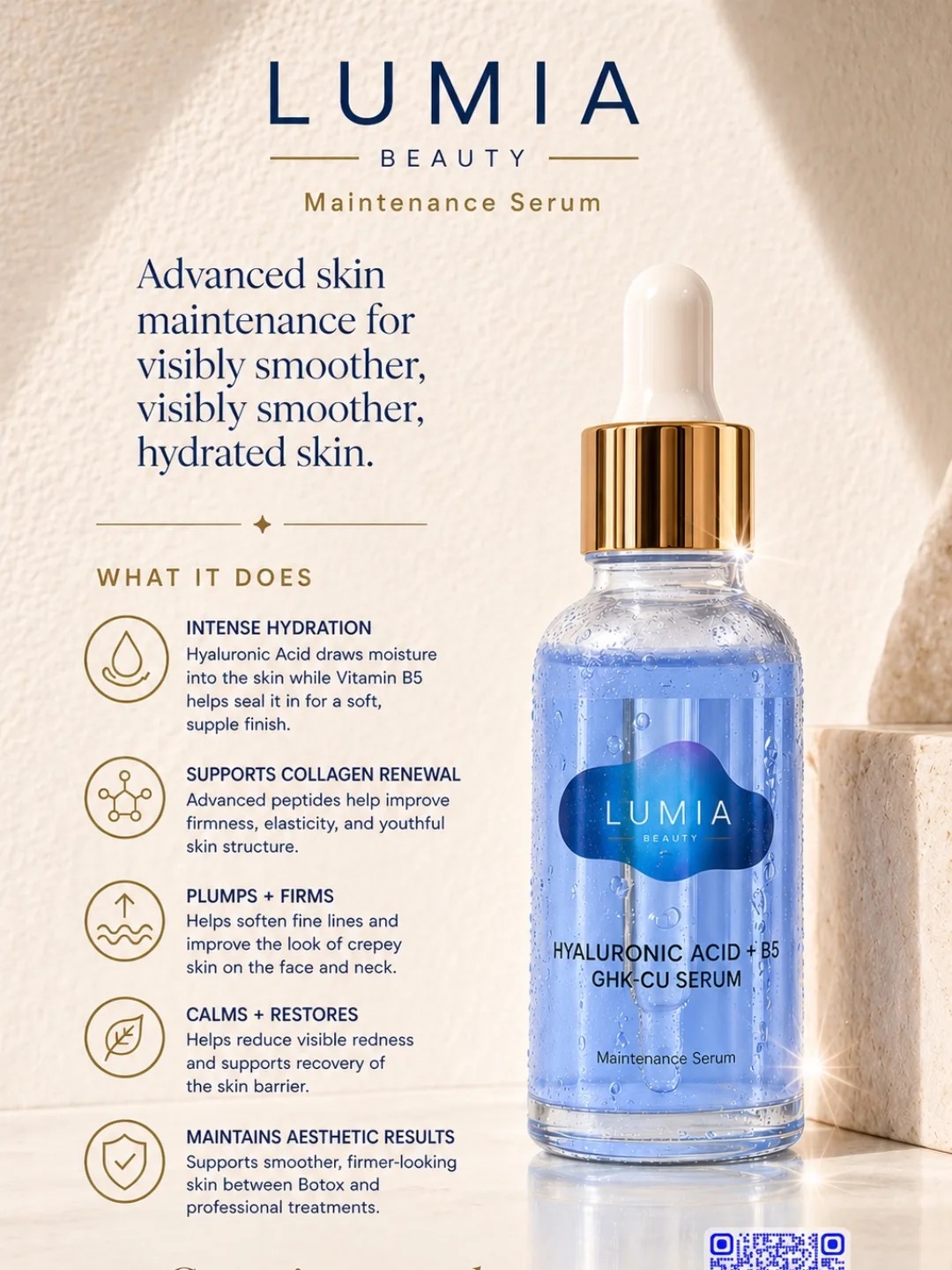
When I developed LUMIA Beauty’s Hyaluronic Acid + B5 GHK-Cu Maintenance Serum, my goal wasn’t to create another skincare trend. I wanted to formulate a maintenance serum built around ingredients supported by meaningful research.
GHK-Cu helps support collagen production and skin repair. Hyaluronic Acid delivers deep hydration, while Vitamin B5 helps reinforce the skin barrier and soothe the skin. Together, these ingredients were intentionally selected to help hydrate, repair, and promote healthier-looking skin through consistent daily use.
I designed it as a maintenance serum because healthy skin isn’t built overnight. It’s the result of using well-formulated products consistently over time, whether as part of your daily routine or to help maintain the results of professional skincare treatments.
That philosophy continues beyond the formulation itself. LUMIA Beauty is currently offered through Elite Nova Wellness and Finesse Spa, reflecting its connection to providers who value evidence-based skincare and long-term skin health rather than chasing short-lived trends.
What to Look for in a Peptide Serum
As peptide skincare continues to grow, look beyond the marketing claims. Consider the type of peptide being used, how it’s formulated, and whether it’s paired with ingredients that support its effectiveness. Most importantly, remember that consistency matters. Like most skincare ingredients, peptides deliver their best results through regular use.
The Bottom Line
Peptides represent one of the most exciting advancements in modern skincare, but not all peptide products are created equal. Understanding the type of peptide you’re using and the quality of the overall formulation can make a meaningful difference in your skincare routine.
That’s exactly the philosophy behind LUMIA Beauty. Thoughtfully selected ingredients, backed by research and designed to work together, can help support healthier, more resilient skin over time.
Follow LUMIA Beauty on Instagram: @lumiabeautyofficial

Alexandra Jacobo is the founder of LUMIA Beauty and co-founder of Jacobo Wellness. With a background in operations and wellness, and married to a functional medicine doctor, she brings a research-driven approach to skincare formulation. LUMIA Beauty’s GHK-Cu Maintenance Serum is available through Elite Nova Wellness and Finesse Spa.
Frequently Asked Questions
What are beauty peptides and how do they work in skincare?
Beauty peptides are short amino acid chains that act as signaling molecules for skin cells, triggering processes like collagen production, repair, and barrier maintenance. Different peptides do different things: signal peptides target fine lines, carrier peptides like GHK-Cu support tissue regeneration, and enzyme-inhibitor peptides slow collagen breakdown over time.
What makes GHK-Cu different from other skincare peptides?
GHK-Cu (copper tripeptide) is one of the most researched skincare ingredients. Unlike signal peptides such as Matrixyl or Argireline that primarily target wrinkles, GHK-Cu has demonstrated roles in collagen synthesis, skin repair, wound healing, antioxidant activity, and overall tissue regeneration — making it a broad-spectrum ingredient rather than a single-function one.
How long does it take to see results from peptide skincare?
Most peptide skincare results are gradual — typically 6–12 weeks of consistent daily use before meaningful changes in skin texture, firmness, or fine lines appear. Collagen synthesis is a slow biological process. Hydration improvements from hyaluronic acid pairings may appear sooner, but structural skin changes require longer sustained use.
Can I use multiple peptides in my skincare routine at the same time?
Yes — different peptides work through different mechanisms and generally do not compete. GHK-Cu pairs well with hyaluronic acid and vitamin B5, which enhance hydration and barrier function. Be cautious combining copper peptides with strong acids (vitamin C or AHAs) in the same application step, as pH affects copper peptide stability.
Are peptide skincare products safe for sensitive skin?
Peptides are generally well-tolerated and unlikely to cause irritation, including on sensitive skin. They carry a lower irritation risk compared to retinoids or exfoliating acids. GHK-Cu, hyaluronic acid, and vitamin B5 are all considered gentle ingredients, making copper peptide serums a good starting point for reactive or compromised skin types.


Ready to Start Your Peptide Journey?
Finding a qualified provider is the most important first step. Gatlan connects you with licensed telehealth professionals who specialize in peptide therapy — so you can get expert guidance, proper protocols, and pharmaceutical-grade peptides prescribed safely.
This article is for informational purposes only and does not constitute medical advice. Consult a qualified healthcare professional before starting any peptide therapy or skincare regimen.
Latest News